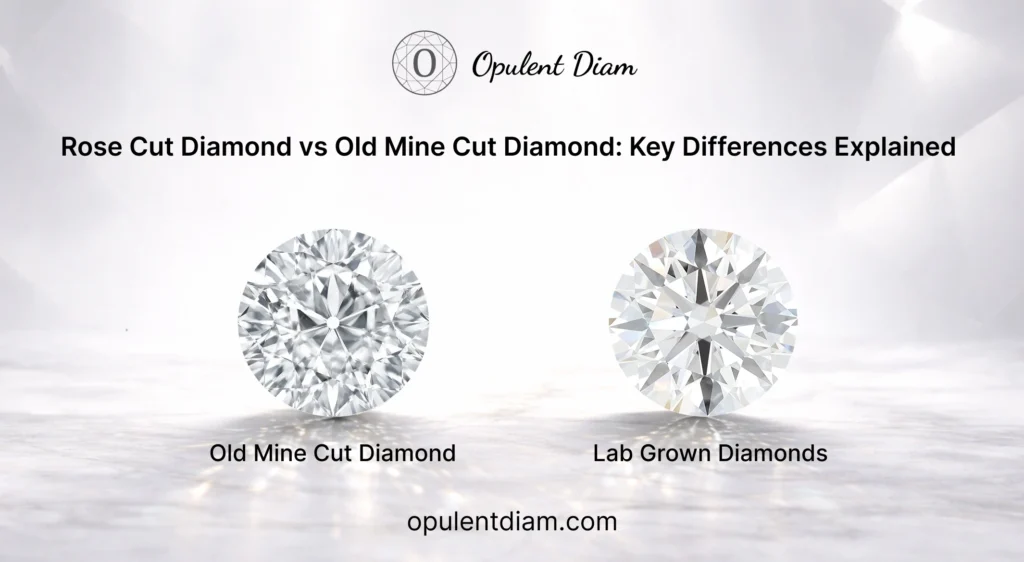
Old Cut Diamonds vs Lab Grown Diamonds: Which Should You Choose?
You may be confused by the numerous options when you are shopping for a diamond. Old cut diamonds and Lab Grown diamonds are two prevalent options. They both are good-looking, though quite different. This guide will describe the unique qualities of each and help you choose the one that best suits you.
At Opulent Diam, we believe every buyer deserves clear, honest information before making such an important purchase.
What are old cut diamonds?
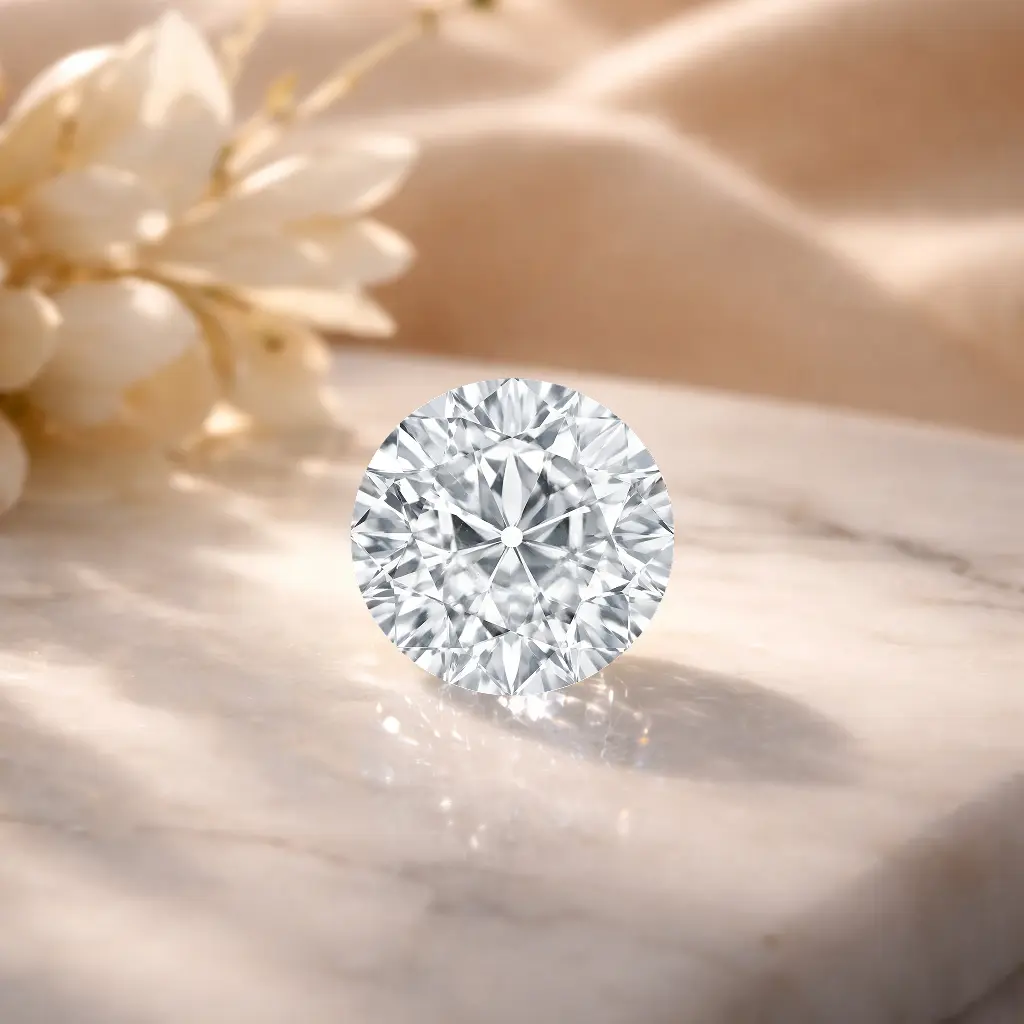
Old Cut Diamonds are hand-cut natural stones that were mostly cut between the 1800s and early 1900s. Diamond cutters at that time did not have modern machines or laser tools. They used their eyes and hands; every Old Cut Diamond appears to be somewhat varied and possesses an individual character.
These diamonds were made to shine in candlelight and gaslight. They possess a gentle, warm light that most people consider romantic and special. They are unique, and none of them is the same.
The most popular style is the Old European Cut. It is a round shape with a very small flat top (known as a table), a deep middle, and large facets. Aspects are flat plane surfaces cut into the diamond that reflect light. Due to the larger facets of an Old European Cut, bright flashes of light and dark may be seen indoors. This effect is known to jewellers as the “crushed ice” or “fire effect.”
The other common style is the Old Mine Cut, which is a rounded-corner square. They are both Natural Old Cut Diamonds, meaning they formed deep in the ground over a billion years.
What Are Lab‑Grown Diamonds?
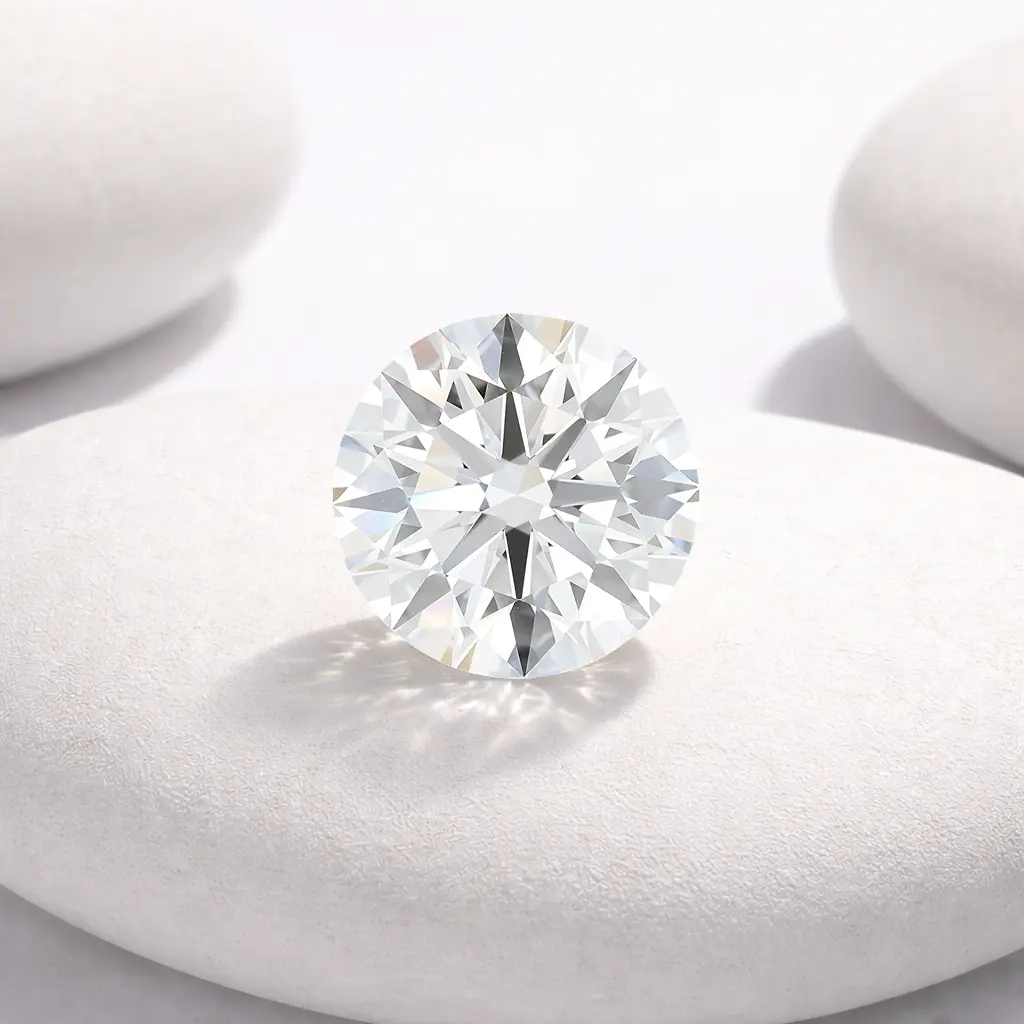
Lab Grown diamonds are manufactured in a laboratory. Scientists employ two primary techniques:
- HPHT (High Pressure, High Temperature) – This method mimics the natural process inside the Earth.
- CVD (Chemical Vapor Deposition)- which deposits a diamond on a carbon gas. The result is a real diamond. Diamonds produced in the laboratory are chemically similar to natural ones. They are pure carbon, as are mined stones. The gemologist must use special instruments to distinguish them from natural diamonds.
Lab Grown diamonds are usually cut with modern machines. They follow today’s cutting standards, like the round brilliant cut, which is designed to maximize sparkle under bright electric lighting.
Old Cut Diamonds vs Lab Grown Diamonds: Key Differences
Here is a clear comparison to help you understand the main differences between Old Cut Diamonds vs Lab Grown Diamonds:
| Feature | Old Cut Diamonds | Lab Grown Diamonds |
| Origin | Formed naturally in the earth | Created in a laboratory |
| Age | Typically 100–200+ years old | Newly created |
| Cut Style | Hand-cut (Old European, Old Mine) | Machine-cut (modern brilliant cuts) |
| Light Performance | Warm, soft glow with deep fire | High sparkle, bright white light |
| Uniqueness | Every stone is one-of-a-kind | Very consistent and uniform |
| Diamond Authenticity | 100% natural, certified authentic | Real diamond, but lab-created |
| Price | Higher due to rarity and history | More affordable |
| Environmental Impact | Mined from the earth | Lower mining impact |
| Resale Value | Strong long-term value | Declining resale market |
| Emotional Appeal | Rich history and antique charm | Modern, ethical appeal |
Diamond Quality: Old Cut Diamonds Vs Lab Grown Diamonds
One consideration when selecting a diamond is cut quality. The way a diamond is cut directly influences its appearance, how it reflects light, and its personality.
Old Cut Diamonds were made with the help of fingers. Artisans were very deliberate and worked slowly, and with their eyes and skill controlled every aspect. That implies that there are no two naturally occurring Old Cut Diamonds that are identical. Their differences in proportion and shape of each stone are slight, and that is why they are so charming. Old European Cut is more proportionate, with facets broader than those of modern cuts. That makes it very strong and warm, rather than bright and intense.
Lab Grown Diamonds grown in laboratories are sliced using state-of-the-art machinery and computer-controlled equipment. It is clean-cut and regular. The majority of Lab Grown diamonds are produced according to current ideal-cut criteria and are intended to produce the greatest brilliance under bright electric light. The outcome is a very standardized, light stone, but it lacks the satisfactory character of an antique cut.
For buyers who appreciate artisan craftsmanship and a diamond that feels truly personal, an Old Cut Diamond, particularly the Old European Cut, can offer what machine precision cannot replicate.
Sparkle and Light Performance: Old Cut Diamonds Vs Lab Grown Diamonds
Old cut diamonds were designed in an era of candlelight, giving them a warm, rich glow and colorful flashes known as fire. Among them, the Old European Cut stands out for its larger facets and deeper structure, creating a bold light-and-shadow effect. Unlike modern diamonds, each old cut diamond is unique, offering a romantic, vintage charm that feels personal and timeless.
Lab Grown Diamonds are grown in laboratories using advanced machinery for maximum brightness. When it is bright, they are quite white and bright–but they are by turns cold and cold, and one stone is almost the same as another. Old Cut Diamonds represent a kind of natural coziness and texture that can be experienced only in a lab and is, in fact, unique. As you wear your Old Cut Diamond or Old European Cut stone as a bracelet, the twinkle of the gem in your eyes has a history, craftsmanship, and beauty that even modern cutting technology cannot fully capture.
Who Should Choose Old Cut Diamonds?
You should consider buy old cut diamond if:
- You are a lover of old or antique jewelry designs or Art Deco jewelry designs.
- would like a diamond with a history and character.
- You are seeking something special that nobody will possess.
- You attach importance to long-term investment and resale value.
- Diamond authenticity that is more than chemistry, you desire.
The Old European Cut is particularly beloved among customers who want an engagement ring that feels both unique and classic. Their gentle light contrasts with the contemporary, radiant cuts, and most people consider it much more romantic.
Who Should Choose Lab Grown Diamonds?
You should consider Lab Grown diamonds if:
- You are working with a tight budget, but want a large stone
- You prefer a modern, clean look with a bright sparkle
- Environmental concerns about mining are very important to you
- You are not concerned about long-term resale value
- You want a simple, straightforward purchase
Lab Grown diamonds are a practical option for buyers who prioritize size and appearance over history and rarity.
Diamond Authenticity: Natural Diamonds vs Lab Grown Diamonds
Real diamonds are a concern for many buyers. Diamonds are real, both natural and lab.
A natural Old cut diamond is a pressure stone formed deep within the earth. It takes billions of years. Whenever you put it on, you are putting on a piece of the earth’s history. A lab cannot copy that story.
Lab diamonds are produced within a couple of weeks or months. They are chemically identical to natural ones, but they do not share the same geological history or rarity.
To have actual history, you need a natural Old cut diamond, a pure story of time, nature, and craftsmanship.
Comparing Natural vs Lab Diamonds at a Glance
| Feature | Natural Old Cut Diamond | Lab Grown Diamond |
| Origin | Earth-formed, antique | Laboratory-created |
| Age | 50–150+ years old | Weeks old |
| Sparkle Style | Warm, romantic glow | Bright, modern brilliance |
| Resale Value | Holds or grows | Declining |
| Rarity | Truly limited supply | Unlimited supply |
| Price | Higher upfront | Lower upfront |
| Authenticity | Natural + real | Real but not natural |
| Best For | Collectors, romantics | Budget-focused buyers |
Natural vs Lab Grown Diamonds: What Buyers Are Really Asking
When comparing Natural and Lab Grown diamonds, most buyers considering both types of gems are not just comparing them. They desire to be aware of what is important to them. A synthetic or cultured diamond is new. It appears to be spotless and perfect, yet it lacks history.
An antique diamond does not have a fictitious history. Before you, it was worn and was loved by someone. It gives the emotional weight and a heart that a lab cannot create.
Other clients are satisfied with an ideal new stone. But for others, they want a diamond that feels like it has a soul, and that is something only a Natural Diamond can offer.
Why Choose Opulent Diam?
At Opulent Diam, we are not just selling diamonds; we are helping you find a stone with a real story. Our specialties include old cut, old mine cut, old European cut, and natural old cut diamonds that have authentic history, warmth, and beauty.
All our diamonds are hand-picked and examined for quality and authenticity. The purchase of a diamond is not just shopping but an investment in something that counts.
This is why we provide every customer with sincere, transparent details so they can make informed choices.
What makes Opulent Diam different is our deep passion for antique diamonds. While most jewellers focus on modern cuts, we celebrate the craftsmanship of a time when every diamond was hand-shaped. The Old European Cut Diamond and other Old Cut Diamonds in our collection are rare, one-of-a-kind stones that you simply cannot find everywhere.
Whether you desire to have an engagement ring, a special gift, or a piece of jewelry to be passed down through generations, Opulent Diam will assist you in locating what you desire: a diamond as unique as the person wearing it.
Final Thoughts
The decision of Old Cut Diamonds vs Lab Grown Diamonds comes down to one simple question – What story do you want your diamond to tell?
If you want a stone that carries history, warmth, and true rarity, a Natural Old Cut Diamond, Old Mine Cut Diamond, or an Old European Cut Diamond is a deeply meaningful choice. These are stones that have survived generations and carry a natural beauty that no machine can fully replicate.
If budget and ethics are your top priorities, a Lab Grown diamond offers real value and real beauty at a lower cost.
At Opulent Diam, we are passionate about helping buyers find their perfect stone. especially Old Cut Diamonds, Old Mine Cut Diamonds, & Old European Cut Diamonds, offer something truly irreplaceable and a connection to history, nature, and timeless elegance.
Frequently Asked Questions (FAQs)
Q1. Can Anyone tell the difference between an Old Cut Diamond and a Lab Grown Diamond with the naked eye?
No. Lab Grown diamonds have the same shapes, sizes, colors, and clarity grades as natural diamonds, making them indistinguishable to the naked eye. However, Old Cut Diamonds carry visible hand-cut character, slightly asymmetrical facets, a deeper body, and a warmth that machines cannot replicate. The real difference lies in history and soul, not just chemistry.
Q2. Do Lab Grown Diamonds hold their value over time?
No. Lab Grown diamonds have fallen in price over time and currently offer weaker value retention than natural diamonds. In 2025’s secondary market, Lab Grown diamonds retain only 30–40% of their purchase price. Old Cut Diamonds, being rare and finite, hold stronger long-term value, making them a wiser choice for collectors and investors.
Q3. Are Old Cut Diamonds & Lab Grown Diamonds certified? How do I verify authenticity?
Yes. Reputable Old Cut Diamonds & Lab Grown Diamonds are certified by recognized gemological institutions. The most reputable certification organizations, GIA and IGI, certify both natural and Lab Grown diamonds to the same high standards.
Q4. What is the GIA’s latest stance on grading Lab Grown Diamonds in 2025?
The rules changed significantly. In 2025, the GIA announced that it would no longer grade Lab Grown diamonds using the traditional 4Cs. Instead, lab diamonds will receive a simplified quality rating, either Standard or Premium, while natural diamonds will still receive the full grading report. This shift further separates natural diamonds from Lab Grown ones in terms of prestige and documentation.
Q5. Which diamond is better for an engagement ring — Old Cut or Lab Grown?
It depends on what you value. If you want a modern, bright stone on a budget, Lab Grown works well. But if you want a ring with genuine character and history, an Old European Cut Diamond is unmatched. If you’re captivated by historical character, unique cuts that tell a story, and the romance of owning something truly irreplaceable, antique diamonds could be calling your name.
Q6. Are Lab Grown Diamonds truly ethical and eco-friendly?
Partially yes, but it’s nuanced. Lab Grown diamonds avoid mining, which reduces land disruption. However, Lab Grown diamonds require significant energy to produce, which has an environmental impact. Meanwhile, the natural diamond industry supports over 10 million jobs globally, and today most natural diamonds are certified conflict-free through the Kimberley Process. Old Cut Diamonds also required no new mining; they already exist.
Q7. How much cheaper are Lab Grown Diamonds compared to Old Cut Natural Diamonds?
Significantly cheaper upfront, but that gap is growing fast. Lab Grown diamonds cost about 80–90% less than natural diamonds in 2025, with prices having dropped over 70% in the last 8 years due to essentially unlimited supply. Old Cut Diamonds, by contrast, are finite and irreplaceable, which is why their value remains stable and continues to attract serious buyers.
Read: Rose Cut Diamond vs Old Mine Cut Diamond: Key Differences Explained